Why IO-Link for Motion Control?
Bringing Intelligence, Diagnostics, and Simplicity Directly to the Point of Motion
Industrial automation is becoming increasingly connected. Machine builders are expected to deliver equipment that is easier to commission, easier to maintain, and capable of providing more information about what is happening at the device level.
At the same time, machine architecture continues to face familiar challenges: excessive wiring, crowded control cabinets, multiple components for relatively simple motion functions, and limited visibility into field devices. IO-Link offers a practical way to address these challenges.
By providing standardized digital communication directly to industrial field devices, IO-Link gives control systems access to more than simple command and status signals. Devices can provide identification, configuration, diagnostic, and operating information through the same connection used for machine control.
When applied to motion control, this approach creates an opportunity to make motors and drives more intelligent while simplifying the overall machine architecture.
AMCI is extending this concept into motion control with a growing family of IO-Link integrated motors, drives, and controllers designed to bring intelligent connectivity directly to the point of motion.
What Is IO-Link?
IO-Link is a standardized point-to-point communication technology used to connect intelligent field devices to an automation system.
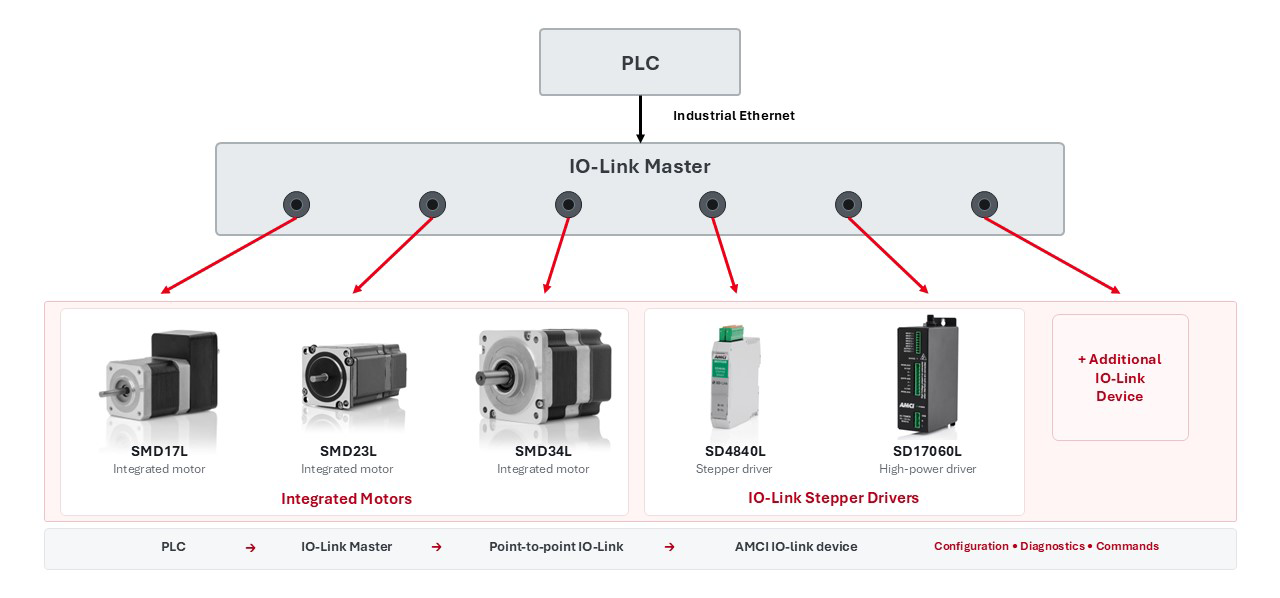
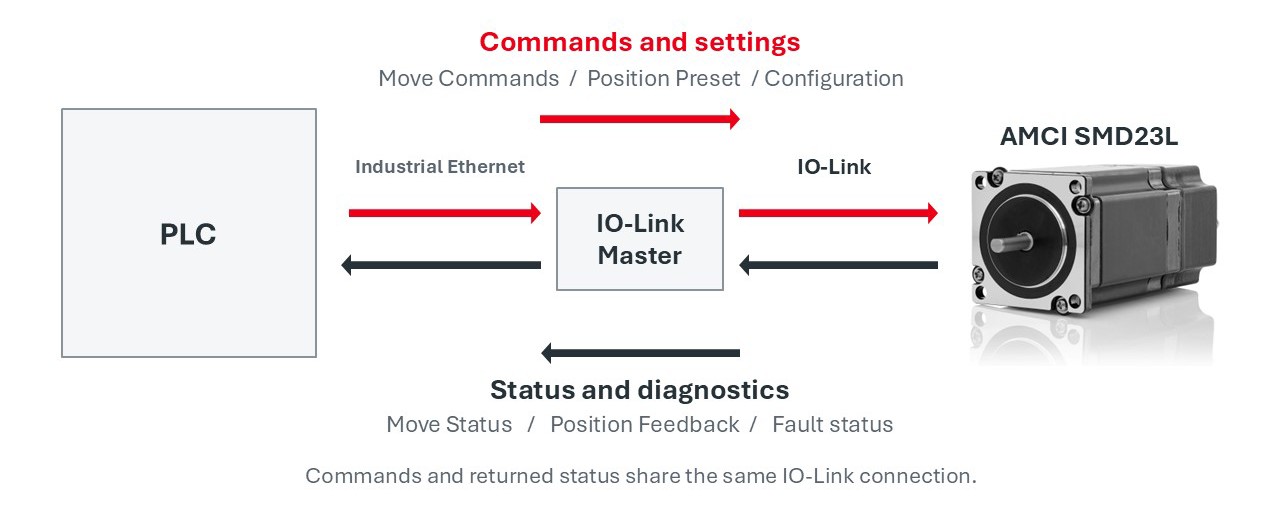
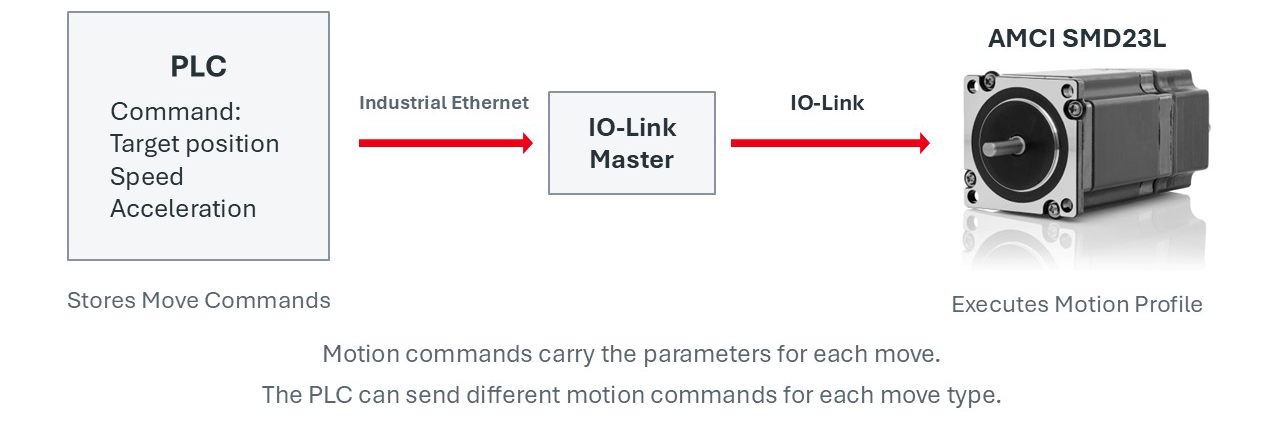
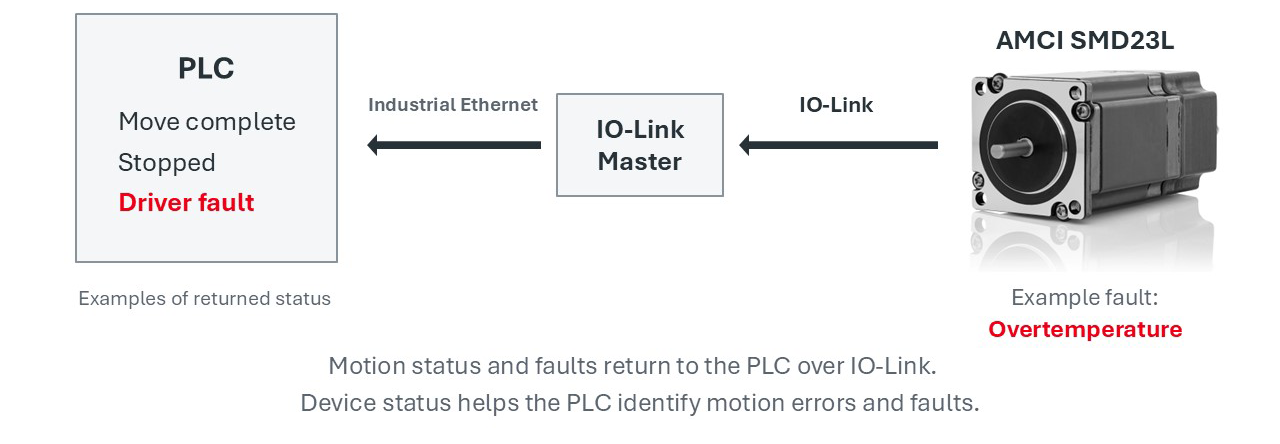
An IO-Link device connects to an IO-Link master, which acts as the interface between the device and the machine's higher level control network. Through this connection, the control system can exchange process data while also accessing device parameters, identification information, and diagnostics.
This makes IO-Link fundamentally different from a conventional discrete connection.
A traditional device may provide only an ON/OFF signal or a limited number of status outputs. An IO-Link device can communicate much more information about itself and its operating condition.
For motion control, that means a motor or drive can become an active source of machine data rather than simply responding to motion commands.
Why Bring IO-Link to Motion?
Traditional motion control architectures often separate the motor, drive, controller, feedback device, and associated wiring.
For sophisticated servo systems, that architecture may be necessary. However, many machine functions do not require a complex multi-axis motion platform.
Applications such as positioning stops, guide adjustments, indexing mechanisms, changeover axes, conveyors, feed systems, and other auxiliary motion functions often require relatively straightforward movement.
These applications still need to be configured, wired, commissioned, diagnosed, and maintained.
Integrating the motor and drive into a single device already reduces some of this complexity. Adding IO-Link connectivity takes the concept further by allowing the motion device to communicate directly with the automation system.
Instead of treating the motor as an isolated electromechanical component, the machine can treat it as an intelligent automation device.
Smarter Motion Can Mean Simpler Machines
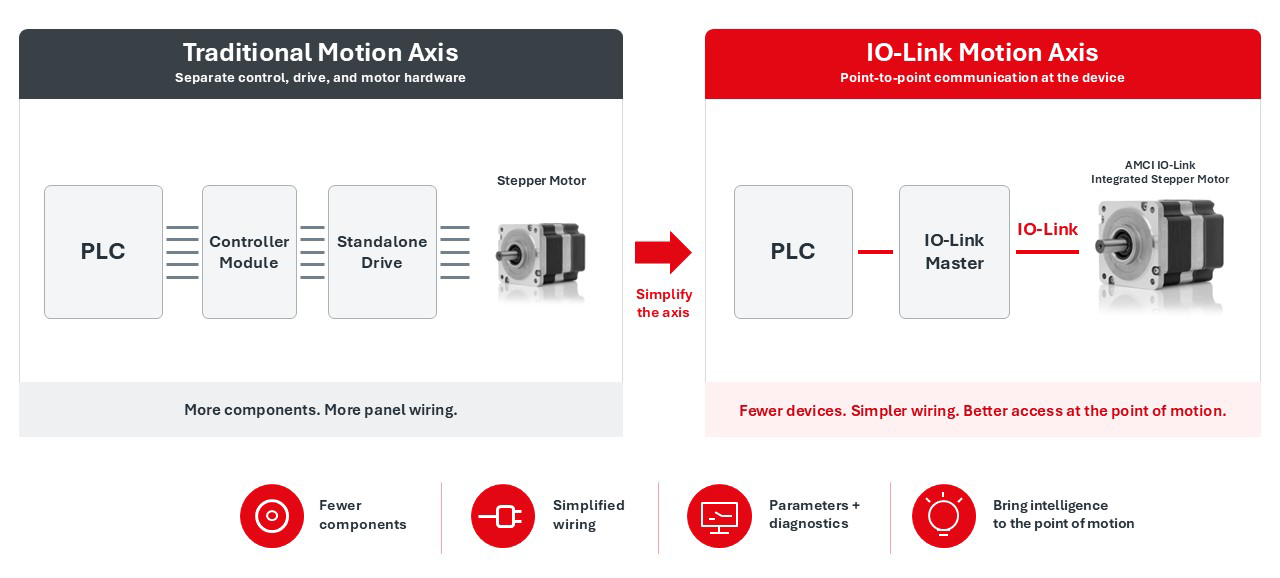
Reducing machine complexity is not simply about eliminating components. It is also about reducing the number of interfaces engineers and technicians must manage.
An integrated IO-Link motion device can consolidate several functions into one connected component. Depending on the architecture, this can reduce external drives, control wiring, cabinet requirements, and the number of separate devices required to implement an axis of motion.
The same communication connection can also provide access to information that would traditionally require additional programming, wiring, or troubleshooting.
Key advantages of IO-Link motion include:
- Simplified machine architecture through integrated motor and drive functionality.
- Reduced wiring and component count, particularly for distributed or auxiliary motion axes.
- Standardized device communication through the IO-Link ecosystem.
- Simplified commissioning through accessible device configuration and parameterization.
- Device identification, allowing the control system or maintenance personnel to identify connected equipment.
- Parameter management, helping establish consistent configurations across machines or replacement devices.
- Diagnostic information that can provide greater visibility into device operation.
- Faster troubleshooting by making device-level information available to the control system.
- Simplified replacement, with parameters capable of being restored rather than manually re-entered.
- Greater machine visibility by bringing information from the point of motion back into the automation system.
- Compact installation options for machines where control-panel or equipment space is limited.
Decentralizing Motion Control
IO-Link also supports a broader movement toward decentralized automation.
Traditionally, much of a machine's intelligence has been concentrated inside the main control cabinet. Drives, controllers, and other automation components may be installed centrally, with power and signal wiring extending outward to equipment throughout the machine.
Integrated motors and distributed control devices allow some of that functionality to move closer to where the work is being performed.
This can be particularly valuable when motion devices are spread throughout a machine or production line.
Placing intelligence closer to the application can reduce wiring requirements, free cabinet space, and make machine expansion easier. An IO-Link architecture provides a standardized method for connecting these distributed devices back into the overall control system.
The result is not necessarily a more complicated network. In many cases, the goal is the opposite: distribute the intelligence while simplifying the machine.
Where IO-Link Motion Fits
Not every axis requires the same level of motion control.
High-performance synchronized servo applications will continue to require dedicated motion networks and sophisticated controllers. IO-Link motion instead provides another option for applications where flexibility, simplicity, diagnostics, and distributed control are important.
Potential applications include packaging machinery, material-handling systems, assembly equipment, conveyors, robotics and automation equipment, food and beverage machinery, printing and converting systems, machine tools, OEM equipment, and general industrial automation.
Within these machines, IO-Link motion can be particularly useful for positioning, indexing, feeding, product changeover, guide adjustment, conveyor adjustment, and other secondary or auxiliary axes.
The objective is to apply the appropriate level of motion technology to the application rather than adding unnecessary system complexity.
AMCI's Approach to IO-Link Motion
AMCI's IO-Link product family brings the benefits of intelligent field-device communication into industrial motion control.
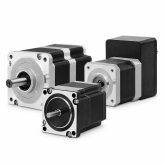
The platform includes NEMA 17, NEMA 23, and NEMA 34 integrated motors, allowing machine builders to select different motor sizes based on application requirements while maintaining a common approach to communication and configuration.
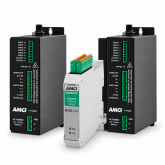
The portfolio also includes AC and DC stepper drives and controllers, expanding the range of architectures that can take advantage of IO-Link connectivity.
By combining AMCI's experience in industrial motion control with IO-Link communication, these products are designed to provide machine builders with a practical way to decentralize motion, reduce system complexity, and gain greater access to device-level information.
Rather than requiring motion devices to remain isolated from the rest of the machine's information architecture, IO-Link allows them to participate directly in it.
How IO-Link Communication Works
Building More Connected Machines
The value of IO-Link is not simply that it adds another communication protocol to a machine. Its value comes from making field devices more accessible.
When configuration, identification, diagnostics, and operating information can move between the device and the control system, machine builders gain more flexibility in how equipment is designed, commissioned, and maintained.
For motion applications, integrating that communication directly into motors and drives brings those capabilities to one of the most important parts of any automated machine: the point where movement occurs. AMCI's expanding IO-Link motion platform is designed around that principle.
The smarter the motion device becomes, the simpler the machine around it can become.